 DRAUGAS NEWS Lithuanian World Wide News in English
Meet Milda De Voe by Jurate Kazickas
I first met Milda De Voe about ten years ago. A mutual Lithuanian friend introduced us. “You’ll like her. She’s interesting and fun,” he said. “Plus, she’s a great writer.”
True on all counts! We’ve had lunch a few times, but I mostly keep up with her many adventures through her quirky, funny weekly blog, “This Is Ridiculous,” where her writing talent dazzles.
Milda is a prolific, prize-winning writer in many genres: poetry, essays, plays, science fiction, fantasy, short stories – even horror. Her book, “A Flash of Darkness,” was praised as “ominous, masterfully conceived psychological fiction.”
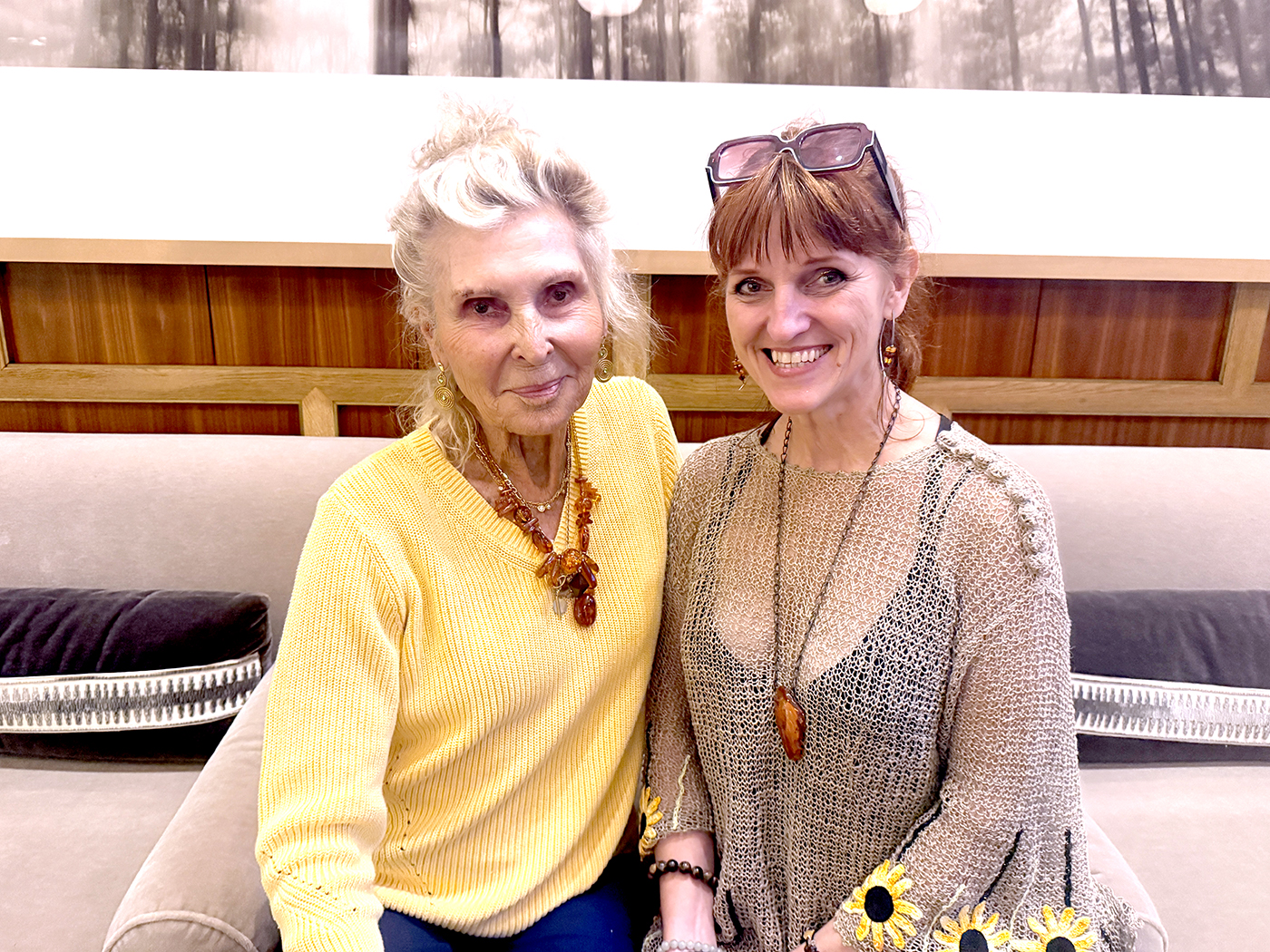
Milda is currently the executive director (and only staffer) of Pen Parentis, which she founded in 2014 as a nonprofit to support and inspire writers with children. She is also the author of “Book & Baby,” published in 2021, with advice on managing toddlers and literary tomes. She is now the mother of two young adults, Zine, 20, and Erazmas, 24.
I exaggerate only slightly to say that Milda is out on the town every night, reviewing cultural happenings in New York City – from Shakespeare in the Park and an art-house film to immersive theater in some downtown warehouse. In between, she teaches, lectures and seems constantly to be filling out grant applications for Pen Parentis or writing fellowships, preferably in some far-flung place like Croatia.
Whew! Are we overwhelmed yet?
But here’s the best part. Her debut novel, “The Boy Who Loved Trees,” is forthcoming. Set in Soviet-occupied Lithuania in the 1980s, it has already drawn an early review calling it a “lyrical debut of longing, secrecy, and the quiet defiance of becoming oneself.”
I made a date to talk with Milda about the book, her peripatetic New York writing life and being Lithuanian.
THE CONVERSATION
A tall, striking redhead with an infectious laugh, Milda arrived at my apartment wearing an authentic Lithuanian linen dress embroidered with sunflowers that had belonged to her great-grandmother. And, of course, amber jewelry!
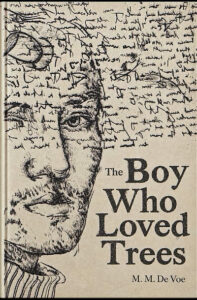 Jurate Kazickas: I’m looking forward to this. But first, what do the initials M. M. stand for?
Milda De Voe: My pen name is M. M. De Voe, which is short for Milda Motekaityte De Voe, because when I first started writing in graduate school, women were sort of expected to write light, domestic, romance-y kinds of things. I wanted to write something more serious, more in-depth, maybe a little darker, so I chose a name that would strip the gender off my name.
J: I so enjoy reading your column, “This Is Ridiculous,” which contains your musings on a wide array of topics – finding joy, word origins, shrugging off mistakes, comfort food. How do you come up with these ideas, especially under pressure when you have to post the blog once a week? (The column is available every Sunday on Substack.)
M: I never have a dearth of ideas. I have a problem narrowing down the ideas to just one topic. I walk around the city, and constantly my brain is firing: This is interesting. I want to explore this. I want to talk about this. And so, the hardest thing for me is just to pick one.
J: Tell me about growing up in the only Lithuanian family in the small Texas town where you were born. What was that like?
M: I felt I had to represent Lithuania to Texans all the time. My name was so unusual; people constantly asked, “What does Milda mean?” And then I had to tell them that it was the goddess of love in pagan mythology. So that was really fun.
J: We have that in common because I always had to explain my name, too – that Jurate was the goddess of the sea.
M: And then, of course, you had to tell them where Lithuania was. And you had to explain the entire geopolitical situation.
J: Yes!
M: And you’re six years old, and you’re having to explain that your country is occupied; it is not willingly part of the Soviet Union, as it seems to be. So I was constantly, even from childhood, steeped in this idea that I was some sort of an ambassador to people who had never heard of the country.
J: And it was important to your parents, especially your mother, to maintain that Lithuanian identity.
M: Yes, it really was. My mother insisted that every Saturday I sit down and copy an entire page from an old Lithuanian history book, with all those accents, the nosinės and all that stuff. And I had to do it perfectly before I could go out and play.
J: And now, as an adult, you still maintain strong Lithuanian ties. You speak and write the language fluently, you visit Lithuania often to engage with the writing community there and attend cultural events in New York City.
M: I caught the fire of patriotism and activism during my years at Lithuanian summer camps in Michigan and Vermont and as a student at Vasario 16-osios gimnazija in Germany. When I was in college in Baltimore, I went almost every weekend to anti-Soviet demonstrations in Washington to raise the visibility of Lithuania and its plight among the American public. I once chained myself to the White House fence for the cause. When Lithuania won its freedom, I was so happy.
J: Now, let’s talk about the book, “The Boy Who Loved Trees.” What is it about?
M: This book is about exploring your identity in a place and time where you are not allowed to do that. The main character, Artie Avilis, is a 16-year-old from a small town in Montana who comes to Lietuva during the Soviet occupation. He is trying to figure out whether he’s American or Lithuanian. He can’t even figure out what Lithuania is, because this country under Soviet occupation is so different from the Lithuania of his mother’s stories. But he’s also grappling with his sexual identity.
J: How did you come up with that topic? The book is dedicated to gay men who were in the closet in the ‘80s, so that theme was very important to you. I get the sense you felt it personally.
M: Yes, very much so. I had two very close friends who did not come out of the closet until they were in their 30s. And it was – I don’t know – upsetting to me. I was really sad that there wasn’t a way for their stories to be told. The men that I knew were lovely men who just liked men, trying to live their lives as best they could and not hurt anybody. And I wanted to tell their story in a compassionate way. Then I thought the analogy of a man who is trying to explore his own identity in a society that wasn’t really allowing it was comparable to Lietuva not being able to explore its own identity because of its situation. You couldn’t even think about expressing your own nationality. You didn’t know what that was. So I thought there was a really lovely parallel. I thought it would work. And I think it did.
J: You said you wrote the draft of this book more than 20 years ago. What took so long to get it published?
M: I had an agent who was very excited about it. Then I was told the book wasn’t American enough to be published, which hurt my soul. And ten years later, they said, basically, it wasn’t gay enough. I was just writing about a particular kind of person and a particular question they were asking: Who am I?
J: The book is set in Lithuania in the 1980s. You, too, went on a KGB-sponsored tour with Tėviškės draugija at that time. I imagine you drew on many of your own experiences for the book. But what was it like for you? Were you also conflicted about your Lithuanian identity?
M: Well, I was fiercely Lithuanian. I was very much an activist. I felt strongly that this was my country and my identity. I believe my entire generation was explicitly told that it was our job to keep the culture and the language going. And if we didn’t, it would die. In the book, the kids are pooling all of the information that they were told by other people back home. And that actually happened to us when we were going. A teacher would come and say, “You have to take these seeds and Bibles and all this contraband to my cousin.” So, on the one hand, you’re kind of excited to do the smuggling. But on the other hand, other people would tell you, “Absolutely don’t talk to anybody. Trust no one. You’re going to get arrested. You’re going to get your relatives arrested.” And then you think, “But this is your only chance. You’re American. They can’t take you.” There was such cognitive dissonance. It was so hard to figure out what was the right thing to do. What was the best way to be Lithuanian? Is it to be quiet and protect everybody there? Or is it to be noisy and take advantage of the fact that you’re American?
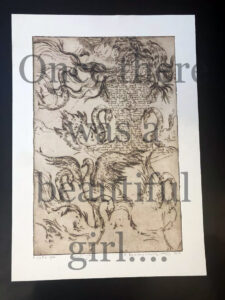
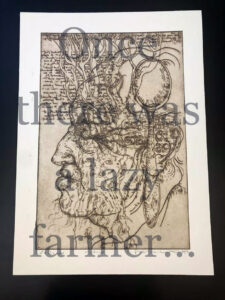
J: Each of the five parts of the novel is introduced by a Lithuanian folk tale. I liked the one about an old farmer and his stomach. Tell me about your fascination with folk tales and how they fit in with the book.
M: My father used to read them to me. We had old books from the ‘60s and ‘70s, and I loved them. They were weird. They were all cautionary tales. Every last one of them was hard to understand. What is the moral? What’s the point? It’s super confusing. But this is how you learn. You learn by figuring it out, by doing the wrong thing, by seeing the mistakes of others and not making them. So, for me, the entire book is a cautionary tale. Here’s a story of a boy who doesn’t come out of the closet. Look what happens. He’s not hurting anybody directly, but he’s hurting himself. And think how much happier he would have been if he had been different, you know. These folk tales show how you learn, how you change.
J: And the book has so many nice Lithuanian touches. For example, each chapter number appears in Lithuanian: Keturiasdešimt trys. That’s quite a mouthful for Americans! Characters are named Dovydas and Jadviga, and scattered throughout are words like arbata, giminė and ragana.
M: I felt it was very important to do that, and also to have those beautiful drawings that reflect the folk tales. The original art was created for the book by Edita Suchockytė. By the way, she has a gallery in Vilnius.
J: Three of your stories from “A Flash of Darkness” were recently translated into Lithuanian and published in literary magazines. Would you like to see your novel in Lithuanian?
M: Oh, yes!
J: One final question: Why should Draugas News readers read this book?
M: People should read “The Boy Who Loved Trees” because, one, they may want to know what it was like for an American-born Lithuanian to see Vilnius in Soviet times – a unique perspective. Or two, they may have lived through the 1980s and want to feel nostalgic. Or, best of all, three, they may be curious about what it was really like to be a Lithuanian teenager back then. Of course, you can also read it for the excellent Lithuanian folk tales!
To learn more about M. M. De Voe and pre-order “The Boy Who Loved Trees,” visit mmdevoe.com.”
Jurate Kazickas is a former Associated Press journalist and president of the Kazickas Family Foundation, which has offices in New York and Vilnius.
Published: Draugas News, September 2026, Vol. 14 No. 9