 DRAUGAS NEWS Lithuanian World Wide News in English
At the end of July, the Chicago Sun-Times published a six-part series on Lithuania that drew wide attention among Lithuanian Americans. Readers shared the stories on social media, read them closely, and discussed them throughout the community. Over two intensive weeks, reporter Stephanie Zimmermann and photographer Ashlee Rezin traveled across Lithuania to introduce American readers to the country today—its experience of democracy, security challenges, economic growth, basketball ties to Chicago, and its people’s hopes and concerns for the future. They also interviewed former Lithuanian President Valdas Adamkus. The reporting was supported by the Pulitzer Center’s Richard C. Longworth Media Fellowship.
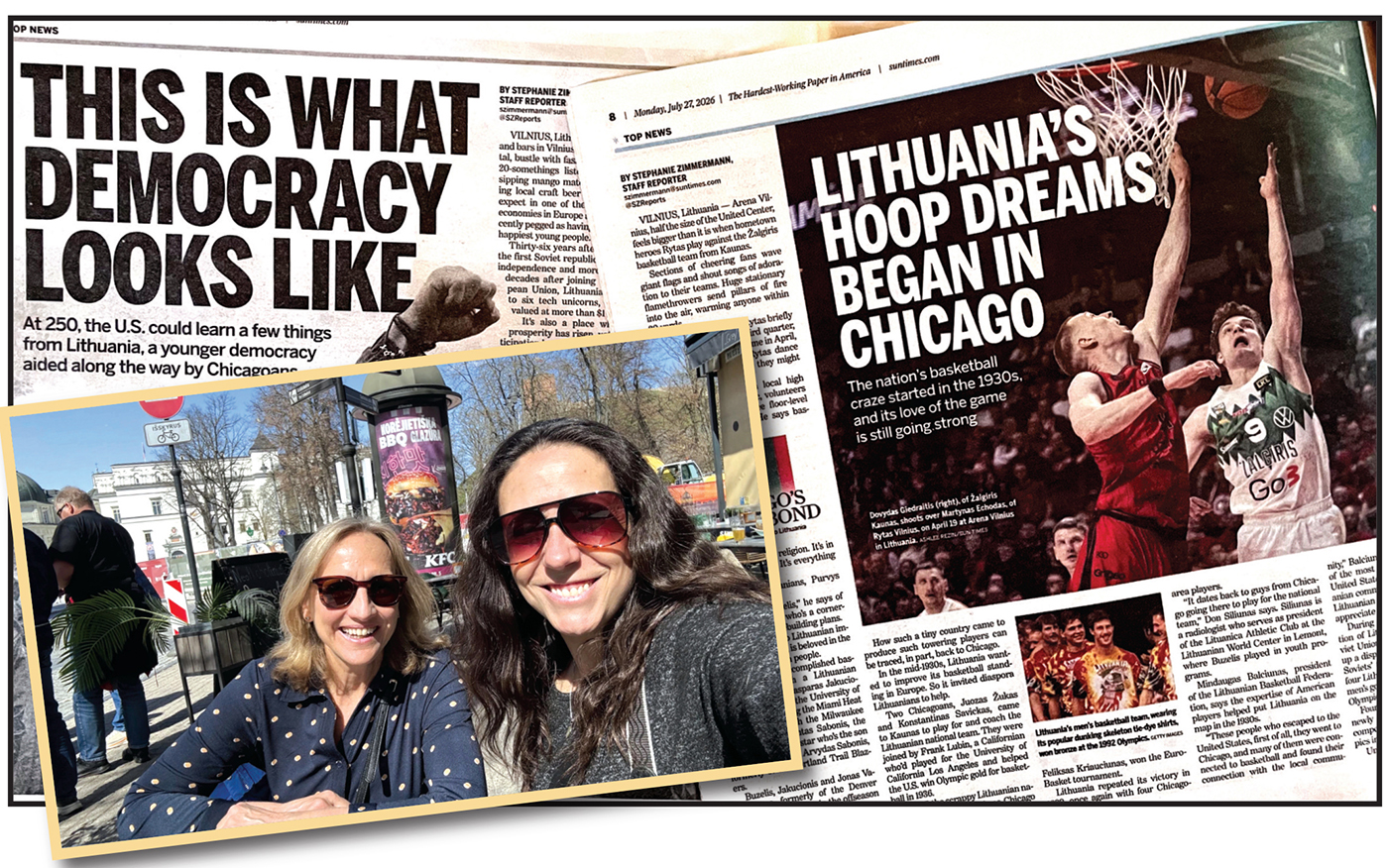
Zimmermann’s choice of Lithuania was deeply personal: it is her mother’s native country. Vida Kuprys spoke with her about her Lithuanian roots, how the project began, two demanding weeks of reporting, and what the journey came to mean to her.
The series was warmly received by Lithuanian American readers. What is your own connection to Lithuania, and when did you first begin thinking about traveling there to report an entire series?
My mom was born in Lithuania and left when she was 6 years old in the summer of 1944, during World War II. She fled with her mom, dad, and three siblings, including her baby brother. They were “displaced persons” in Germany.
My mom spent her school-age years in Germany and the rest of her life in the United States, after arriving here as a college student. I think because of that, and because she married my dad, who is not Lithuanian, her connection to Lithuania faded over time. They moved around the country and finally settled in Wisconsin, where I grew up. There wasn’t a big Lithuanian community in our town, like there is in Chicago, so I was never involved in all the Lithuanian American activities like language classes or folk dancing.
I also think that because of her childhood trauma, she may have associated her native country with a lot of sadness.
But it’s interesting because there was always a little kernel of “Lithuanian-ness” in my mom, and it eventually blossomed. She was very excited about their independence movement starting in the late ‘80s. That in turn got me interested in Lithuania. I was a young journalist then. I remember following the events in Lithuania and, later on, cheering for their basketball team at the 1992 Summer Olympics.
My mom read Draugas News and Lithuanian Heritage magazine to keep up with events in Lithuania. During the COVID pandemic, we were looking for a diversion, so I said, “Why don’t you teach me Lithuanian?” Ha ha! Easier said than done! But she taught me a few very basic words: numbers, colors, family members, household items, and it was a nice way to keep ourselves busy when we were stuck inside. Later, after she died, I decided to really learn the language. I am trying, anyway! And since fall 2023, I have been doing a weekly Zoom meeting with a language teacher.
The first time I went to Lithuania was in 2019, when my mom was still alive. I had been hearing for years from my cousins about how beautiful it is there, so my husband and I took a trip to Vilnius and Trakai.
We liked it so much that we returned in 2024 with our two adult daughters and their significant others. On that trip, we saw a lot more of the country, including a wonderful trip to the coast.
When I heard about the Pulitzer Center fellowship, I immediately thought that Lithuania would be a great topic to pitch.
First of all, Lithuania is not often covered by major media in the U.S., which is a shame.
And second, there are great stories there! Their fight to get out from under Soviet occupation was not that long ago—and I thought it was interesting that we could hear from those who were there, unlike in America, where our independence fight happened 250 years ago.
Lithuania is also very interesting because of where it sits in Europe, basically holding the line against Putin’s Russia and Russia’s ally Belarus. That’s a really important story right now, given all the talk about the future of NATO. For people in Lithuania, that’s an existential matter.
And of course, Lithuania and Chicago have so many strong ties, and I work for the Chicago Sun-Times, which is part of Chicago Public Media.
So for all those reasons, I felt strongly that this was an important place to focus on.
You received the Pulitzer Center’s Richard C. Longworth Media Fellowship for this project. How does the fellowship work, and what did it make possible for you and Ashlee?
The fellowship is for journalists to do international stories of interest and importance to a Midwest audience, which seemed perfect for this project.
If you are chosen, they provide a grant for all the travel and resources you will need, based on a budget you submit with your application. They covered our air travel, lodging, transportation, food, and the services of our local translator, who doubled as a driver, for the two weeks we were in Lithuania.
There is no way we could have gone on this reporting trip otherwise, so we are really grateful for that support.
The Pulitzer Center was wonderful to work with. They don’t exercise any editorial control; they trust the people they choose to do good journalism.
This was your third trip to Lithuania. How extensively did you prepare for two weeks of reporting?
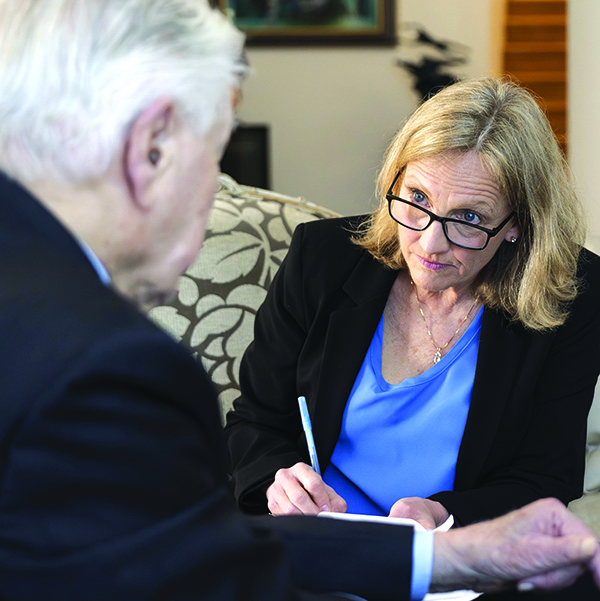
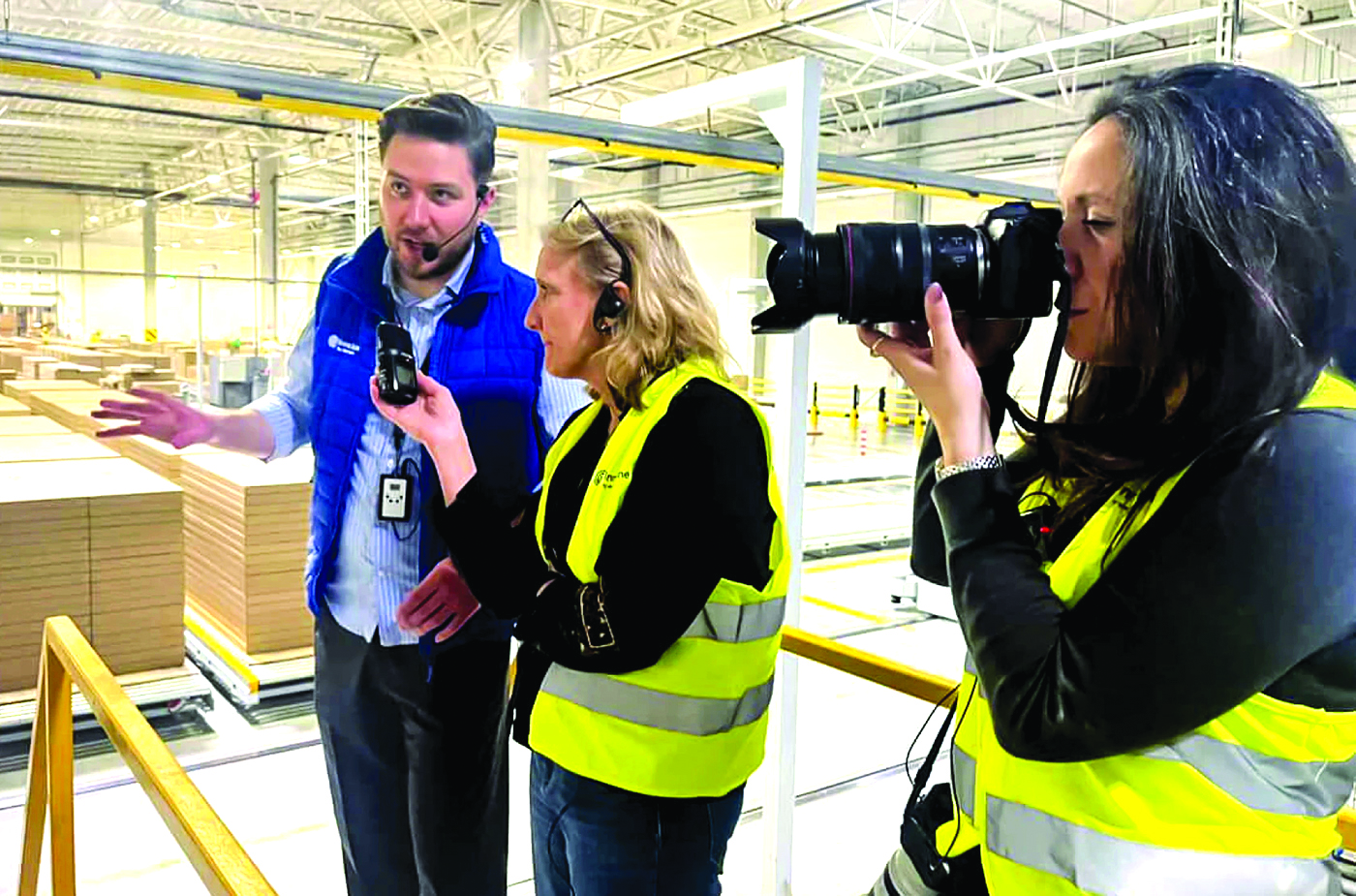
I did a ton of prep before the trip. First, I had to do a lot of research just to submit the proposal. Once we were chosen, I did more research and set up as many in-country interviews as possible to maximize our time. Our schedule was like a well-choreographed ballet, with interviews in various locales from morning until evening, including on the weekends.
Al Domanskis of Chicago was a big help in connecting me with sources in Chicago and Lithuania, and the Lithuanian Consulate in Chicago was crucial in connecting me with government and business sources.
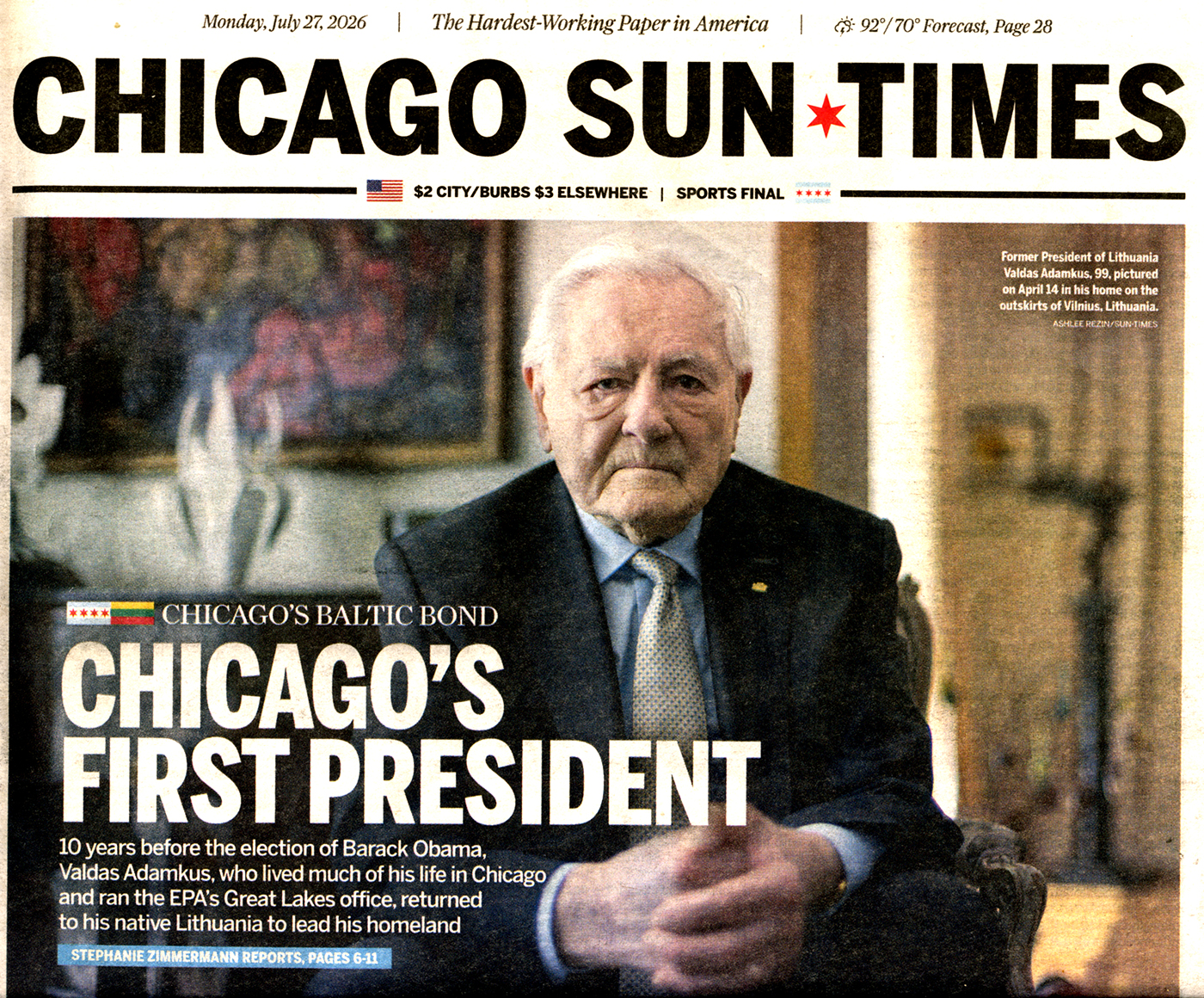
I was so grateful that former President Valdas Adamkus made time to meet with us.
On the whole, people were exceptionally welcoming and open to being interviewed. Once they started talking, we got really deep into these ideas of democracy, defense, and related matters. Several people did extended interviews of 60 to 90 minutes, and I wish I could have used more of that material. But everything I learned from those conversations ended up influencing the stories.
Many times, a conversation with one person would lead me to several other people. Ashlee and I started joking that it seems like everyone in Lithuania knows each other!
If you had traveled without a set reporting assignment, simply following your own interests as a journalist and visitor, what else would you have wanted to explore? What personal impressions did not find their way into the six published articles?
I really find this whole idea of Lithuanian young people recently being named the “world’s happiest” to be very interesting – even though they all recognize that they sit in a vulnerable place on the map of Europe. I got into that idea a little bit in the stories. But that is something I’d explore more, if I had the space to do it.
How do young people hold two ideas in their head simultaneously: “I’m optimistic, and yet I’m maybe also a bit worried”? I mean, look at how Lithuanians have rallied to help Ukraine. The presence of an aggressive Russia is clearly on their minds.
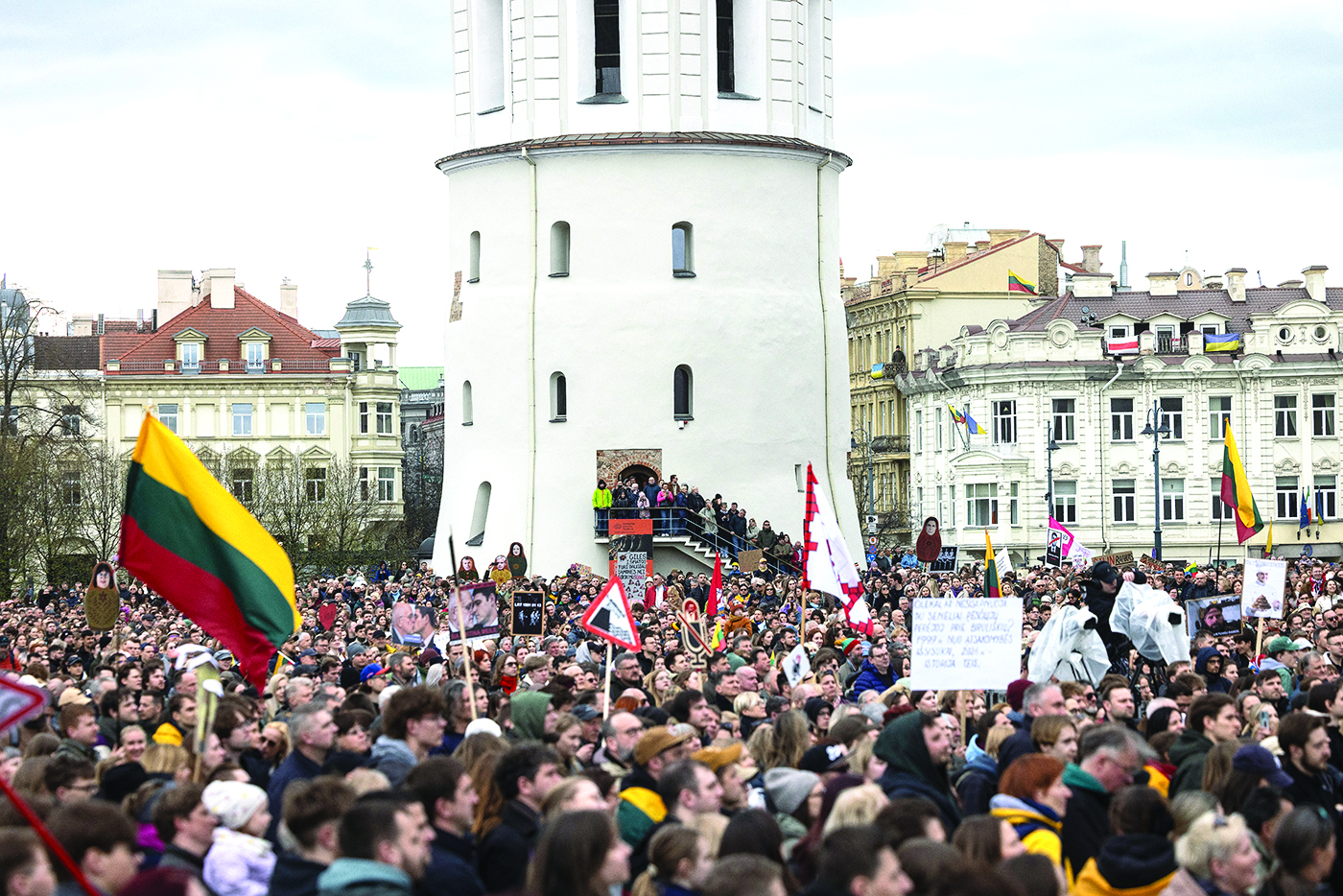
The answer I got from most people I spoke with was, well, we know where we sit on the map, but at the same time, life goes on. What can you do except be prepared, advocate for yourself, and keep going with work and school and life? I really respect that attitude.
Also, just seeing how many people were willing to stand up for journalism and the arts in the culture protests in Lithuania was really interesting to me – pushing back against illiberal forces and standing up for a democratic culture that’s important to protect.
What moment from the journey made the deepest impression on you? What surprised or delighted you? Was there anything that troubled or disappointed you?
This doesn’t necessarily surprise me, but it was striking how ordinary Lithuanians would share with me what they really think about the U.S. administration disparaging NATO, yet Lithuanian politicians were a lot less likely to vigorously condemn it.
That was not surprising – of course, politicians are going to be more diplomatic – but it’s a sign of how smaller countries feel they have to tiptoe around bigger countries, and on a personal level, that makes me sad.
One thing I wish more Americans understood is how physically small the distances are in Lithuania’s neighborhood. The Suwałki Gap is only 65 miles long. I tell people to imagine if Illinois were Lithuania, Iowa were Kaliningrad (Russia), and Indiana were Belarus. That’s how closely they feel the threat.
During the trip, did you feel that you were in some way a part of Lithuania, that your roots were there? How did you connect with the people you met, and did the Lithuanian you have been learning prove useful?
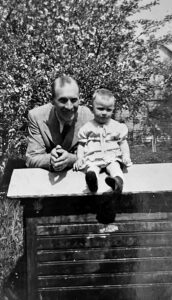
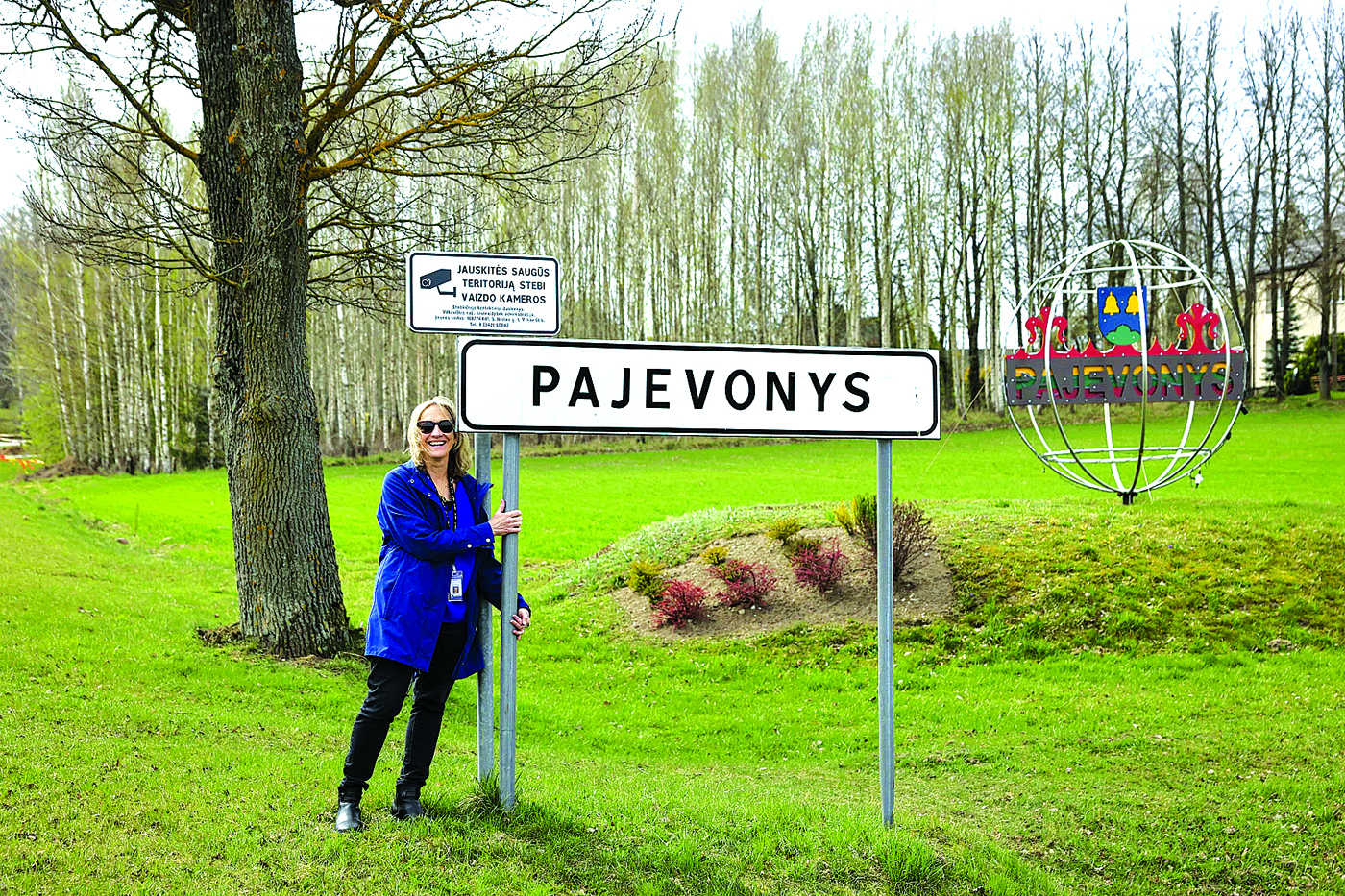
One hundred percent, I felt connected! I honestly felt like my Lithuanian mom was present during all of it – the preparation, the interviews, the writing – the whole project. A photo of my mom as a baby, sitting on an empty beehive box, is my cellphone screen saver, so I see that all the time. There were some funny coincidences that made me feel her presence, including when we were driving in southwestern Lithuania to try to get to a Sunday market to interview people, and we had to take a different route because one of the country roads was not great. We turned the car around, and not 100 meters ahead was a sign for PAJEVONYS, which happened to be where my mom lived as a baby, around the time that photo on my phone was taken.
Learning Lithuanian (even as rudimentary as my skills still are, after two and a half years) was very helpful. I think when people see my last name, “Zimmermann,” they don’t expect me to speak any Lithuanian. So it definitely was an ice-breaker. And I think even though most people spoke perfect English, they appreciated that I was trying to learn their native language.
When we spoke, you were preparing to return to Lithuania on August 11 for a family celebration. What can you tell us about your family ties there? Was Lithuania already a strong presence in your life, or has this reporting project deepened that connection?
My sister and I didn’t grow up with all of the Lithuanian activities that many diaspora kids did, because we were only half-Lithuanian.
I was always in touch with my first cousins in America and Germany, two of whom were 100% Lithuanian and were, and are, very plugged in with the Lithuanian community.
After independence, I got to meet some second cousins and other relatives who traveled to the U.S., including one who moved here permanently and started a family here.
In recent years, it has been really fun getting to know this whole other wing of the family. Some are people my age who lived very different lives during the Cold War.
This summer, we are having a big cousins’ reunion in Lithuania with family members from the U.S., Germany, and Lithuania, and I’m really looking forward to seeing people who I know well and meeting others for the first time.
Did you see the Lithuanian American community differently after your reporting trip?
Besides the interviews I did while reporting in Lithuania, I interviewed several Lithuanian Americans in Chicago. I knew the diaspora here was very connected with people in Lithuania, but I didn’t realize how much people in Chicago actively helped and supported Lithuania as it worked for its independence. That was a revelation for me – those strong ties and all the hard work that went into that. The volunteers who started the Lithuanian Hotline and Lithuanian Mercy Lift really deserve a lot of credit for all the work they did to get Lithuania on its feet at an important time.
The series made a tremendous impression on the Lithuanian community. What has the response meant to you, personally and as a journalist?
I’m just glad people are reading and sharing the stories! There’s nothing worse than writing a story that nobody reads.
Here’s my chance to remind people that the whole series is at suntimes.com/lithuania, and there is no paywall!
The Chicago Sun-Times has graciously given Draugas News permission to reprint several articles from the series. They will appear in the next two issues of the paper.
Published: Draugas News, August 2026, Vol. 14 No. 8